
The Difference Between Cleaning, Sanitizing & Disinfecting
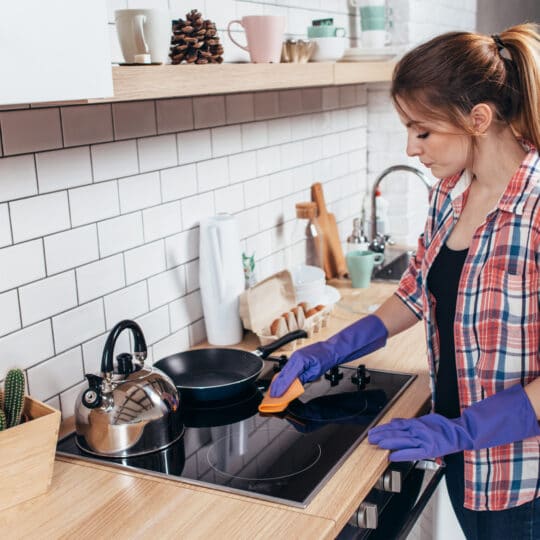
Regularly cleaning your home helps to control everyday dirt. But sometimes it’s not enough to tackle tough grime and germs. This is where sanitizing and disinfecting come in. Learn the difference between the three and when each are needed.
- Cleaning: dusting, vacuuming, and scrubbing with soap and water removes surface dirt and impurities.
- Sanitizing: spray or wipe a specialized formula—stronger than soap—to help reduce germs and bacteria to satisfy health codes or regulations. Clean surfaces before sanitizing.
- Disinfecting: apply stronger solutions to kill germs and bacteria. Clean surfaces before disinfecting.
In all instances, cleaning is an important first step to help remove surface-level dirt. Sanitizers and disinfectants may not work as effectively on dirty surfaces.
What to Clean in Your Home
Here are some of the hot spots to focus on, especially during cold and flu season:
- High-touch areas, including switches, electronics, doorknobs, and countertops
- Visibly dirty surfaces
- Washable toys
- Hard floors (dust before mopping)
- Carpets and rugs (vacuum before shampooing)
- Upholstery (use vacuum attachment to reach in between crevices)
Using covers on furniture and electronics helps to keep them clean and make them easier to clean.
What to Sanitize in Your Home
Once you’ve cleaned, you can further reduce germs by sanitizing the following surfaces:
- Food prep and storage areas
- Nonporous items, such as hard toys
- Hard surfaces, especially in the kitchen and bathroom
You can sanitize certain objects by boiling, steaming, and using a specially formulated solution. A dishwasher is a popular place for sanitizing everyday items. All items should be completely dry before storing or using again. Daily sanitizing may not be necessary if surfaces and objects are cleaned regularly.
When and How to Disinfect
After cleaning a surface, disinfecting helps kill any remaining viruses and bacteria. One of the most common reasons for disinfecting is if someone in your home is sick or has a weakened immune system. There are many ready-to-use disinfecting products on the market, but you should be cautious about what surfaces you use them on. Here are some other best practices for disinfecting:
- Always read and follow the product directions.
- Wear the recommended equipment—such as gloves or goggles—to help protect your skin and eyes.
- Ensure proper ventilation indoors to prevent reactions from harmful fumes.
- Do not mix any cleaning products.
- Properly store any chemicals out of reach of children and pets.
Clean, sanitize, and disinfect surfaces in your home to remove dirt, germs, and other impurities to help keep you and your family healthy. The right product and process makes the job easier and helps to keep your surfaces safe and shiny.